

Buzz
Buzz brings people and AI agents into one mobile workspace with Flutter
Success metrics
<1
month from weekend prototype to iOS and Android launch
500K+
downloads on GitHub
33K+
stars on GitHub
As software teams increasingly rely on AI coding agents, working with agents inside isolated chat windows on individual laptops has created a new kind of silo. When teammates cannot see what an agent was asked, why an architectural path was chosen, or where a prompt went sideways, jumping in to collaborate or debug becomes much harder. Buzz, an open-source workspace created by Block (the company behind Square, Cash App, and Tidal), solves that disconnect by bringing people and AI agents together inside shared channels and threads. Built on the open Nostr protocol, an open standard for cryptographically signed messages, Buzz gives every AI agent its own cryptographic identity, channel memberships, and searchable audit trail, just like a human teammate. Engineers and designers work out in the open, calling teammates into a channel whenever an agent needs guidance, reviewing patches together, and shaping features in real time.
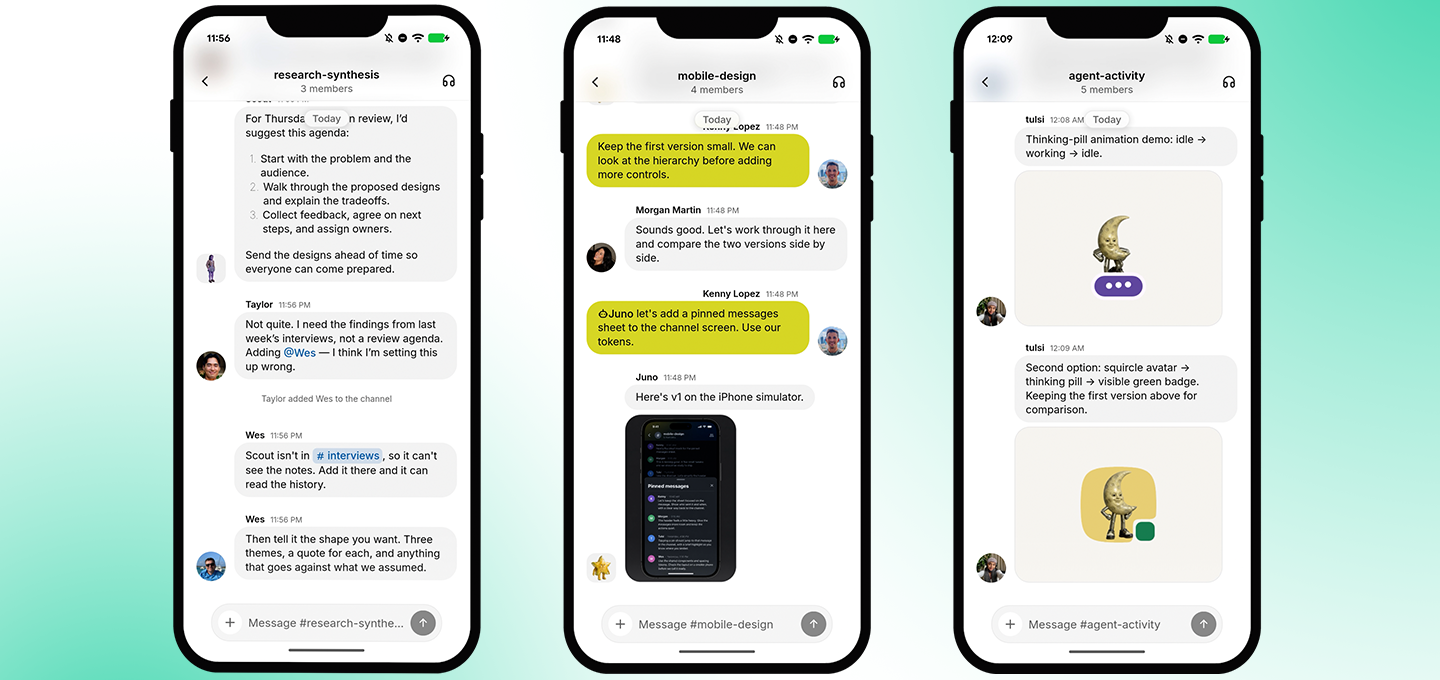
What started as Block's big internal bet for running the company quickly became the daily home for its own builders, who were soon using Buzz to build Buzz itself. When the team open-sourced Buzz in July 2026 (announcement), launch-day adoption surged to 10 to 100 times what they expected, climbing to about 500,000 downloads and about 33,000 stars on GitHub in less than 3 months. With feature requests and bug reports pouring in from a fast-growing developer community, shipping a responsive, high-quality mobile app for iOS and Android became essential.
Why Flutter? Keeping pace with viral demand through instant iteration for humans and AI agents
Buzz co-creator Wes Billman knew immediately that Flutter was the right choice. Having built production apps with Flutter for years, Wes prototyped the first version of the Buzz mobile app in just a few days so he could keep collaborating in Buzz even when away from his laptop. From that weekend foundation, the team took the mobile app from beginning to launch across iOS and Android in less than a month.
As community demand accelerated, Dart and Flutter helped relieve the pressure on the team. Dart's blend of just-in-time (JIT) compilation during development and ahead-of-time (AOT) compilation for release builds delivered smooth, native-feeling chat performance from a single codebase. Just as importantly, Flutter's hot reload and fast, reliable automated testing tightened the feedback loop not only for human engineers, but for their AI agents too. Inside Buzz, coding agents can implement mobile features, run widget tests, and verify fixes faster without waiting on slow dual-platform build cycles.
Building with Flutter: Lightweight architecture and live designer-to-code collaboration
To keep development fast as contributors joined in, the team designed the open-source Buzz mobile client around simplicity, proven community packages, and direct collaboration in code:
-
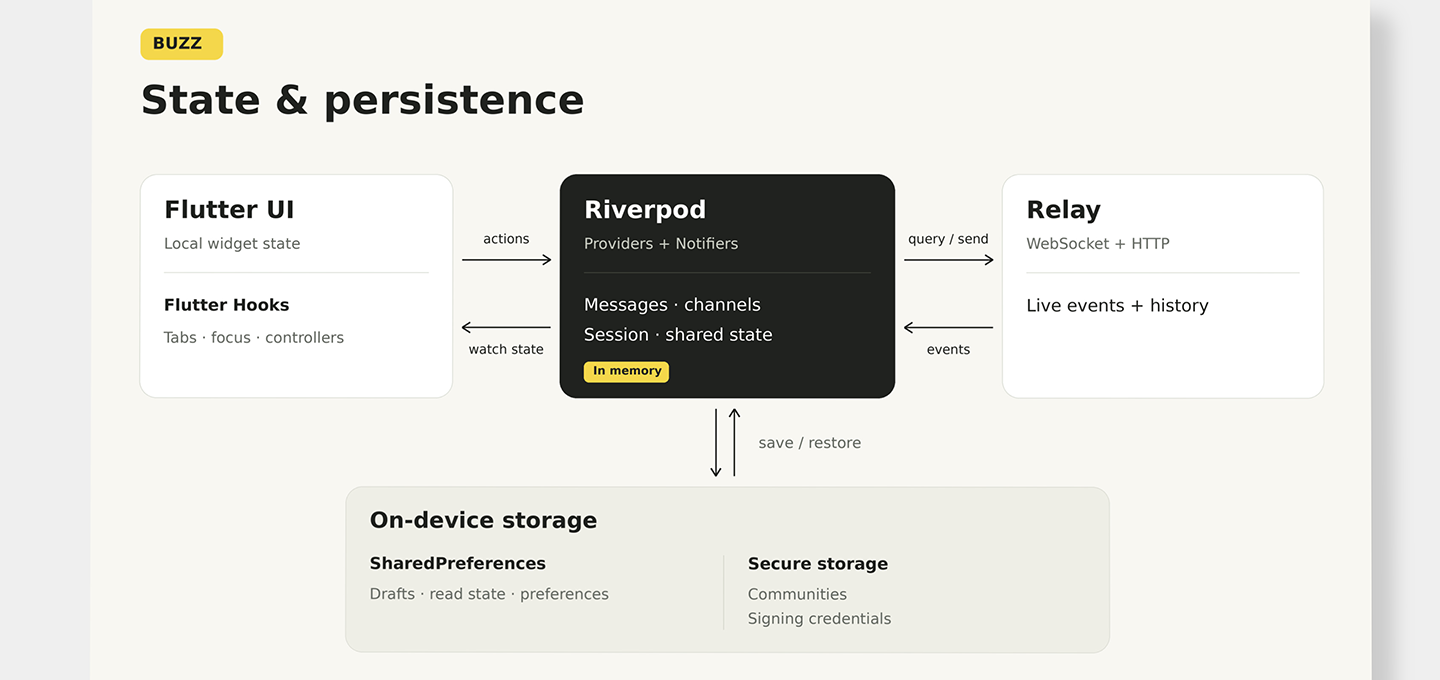
Lightweight, feature-focused state management:
Rather than over-engineering heavy architectural layers,
the team kept the codebase intentionally lean
by pairing Riverpod (
hooks_riverpod) andflutter_hooks. This combination cuts out verbose boilerplate so engineers and agents can stay focused on shipping user-facing features. -
Core protocol and AI chat rendering from pub.dev:
Instead of reinventing foundational plumbing from scratch,
the team leaned on reliable open-source packages on pub.dev.
At the heart of the app,
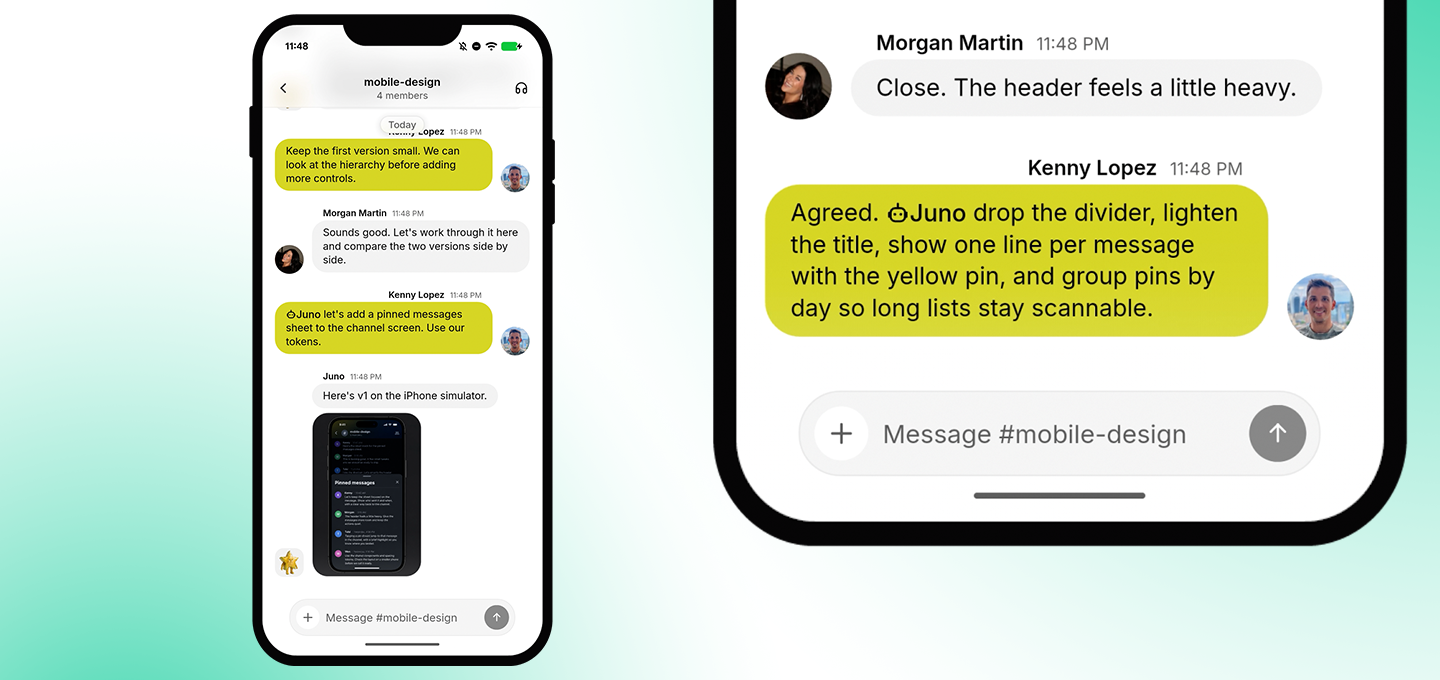
nostrhandles cryptographic event signing and real-time WebSocket relay communication, whilegpt_markdownrenders rich AI agent responses, markdown threads, and code blocks smoothly without weeks of custom chat-list tuning. - Designers pushing Flutter code directly in Buzz: Working in Buzz reshaped how design and engineering collaborate on mobile. Working alongside co-creators Wes Billman and Tyler Longwell and Buzz Lead Designer Morgan Martin, mobile designer Kenny Lopez, who had not pushed production code before, now iterates directly in Flutter through Buzz, launching the simulator and seeing changes live instead of handing off static mockups.
Looking ahead, the Buzz team is building remote agents, remote workspaces, and voice collaboration directly into the Flutter app. Once remote agents arrive on mobile, builders will be able to spin up tasks, review patches, and steer multi-agent workflows entirely from their phones on the go, freeing teams from needing to sit at a laptop to build software.
Key results and business impact
By choosing Flutter, Block turned a weekend mobile prototype into a fast-growing, open-source workspace built for human and agent collaboration:
- Weekend prototype to launch in under a month: Built the first version of the Buzz mobile app in just a few days and launched on iOS and Android in less than a month from a single shared codebase.
- Sustained velocity through 10x to 100x launch demand: Kept pace with community feature requests and bug fixes as open-source adoption grew to roughly 500,000 downloads and 33,000 stars on GitHub.
- Faster feedback loops for both people and AI agents: Leveraged hot reload and fast, reliable Flutter tests so both human developers and AI coding agents can ship features and verify fixes rapidly.
- Designers shipping live UI instead of static handoffs: Enabled mobile designers who had never pushed code before to iterate directly in Flutter, run the simulator, and refine live agent-activity indicators in real time.
-
Lean, open-source architecture powered by pub.dev:
Delivered a smooth, native-feeling real-time chat
and cryptographic relay client without over-engineering
by combining Dart,
hooks_riverpod,flutter_hooks,nostr, andgpt_markdown.